A Rainy Afternoon at the Window
Rainy afternoon light can change how a room’s materials read. Learn to spot shifting colour, texture and glare before choosing where each piece belongs.
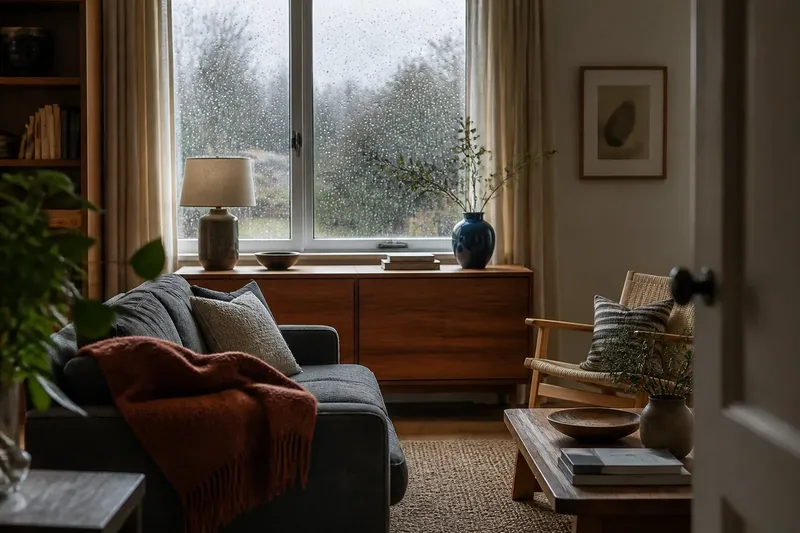
Rainy afternoon light can change how a room’s materials read, even when nothing has moved. Watch the same corner as the sky shifts and you can tell whether a surface’s colour, texture or reflected shape is shaping the room’s mood.
Set a clear question
Choose one room and one decision: perhaps whether a timber sideboard feels too visually heavy, or whether a woven rug helps soften a plain floor. Keep the usual curtains, lamps and furnishings in place so the scene remains familiar.
Before you begin, write down the decision and the materials involved. Record the weather in plain language, such as “steady drizzle” or “clouds lifting”; this is context, not a forecast or a verdict about how the room will look in every season.
Follow the changing view
Stay in your usual seat and attend to the room’s overall composition. Notice which object first draws your eye, whether the main shapes remain easy to distinguish, and whether a detail disappears as the daylight changes. These clues are useful when you are deciding where furnishings belong, not just what colour they appear to be.
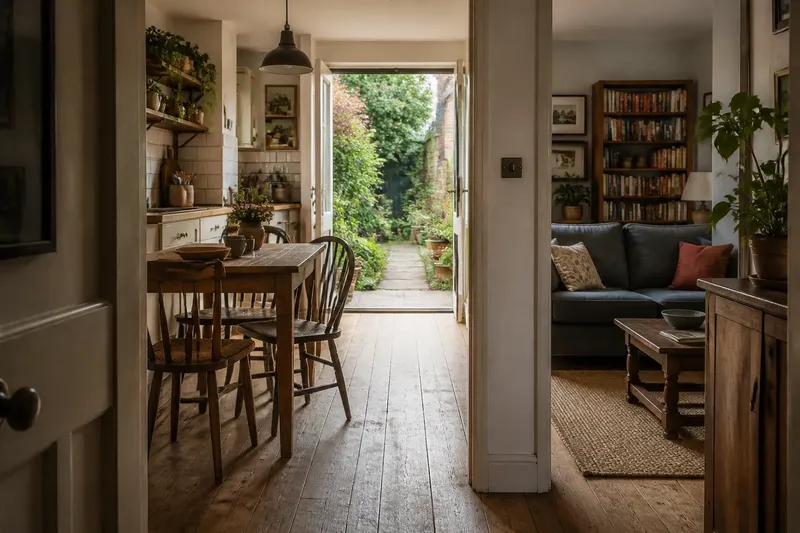
Then look from a doorway or another place you commonly pass. A tall lamp may feel balanced beside a chair from one angle but interrupt the view across the room from another. The aim is to assess how the arrangement reads in ordinary use, rather than to make a display that works only from one carefully chosen spot.
Read materials in context
Materials contribute to a room through their visual weight and how they relate to one another. A broad timber surface can anchor a seating area; a fine weave may add detail without demanding attention; glazed ceramic can introduce a crisp highlight. The effect depends on the surrounding shapes and colours, not on a material in isolation.
Cloud cover softens shadows, so outlines may seem less sharp and some surface details quieter. A wool throw might retain its raised texture while appearing less vivid, while a glossy vase can catch a pale window shape. Describe what you see before judging it: “the throw blends into the sofa” is more useful than “the throw is wrong”.
Reflections can also change the apparent balance of a corner. If a bright patch on a framed picture or polished tabletop seems distracting, shift your head slightly; a shape that moves with your viewpoint is a reflection. Note whether it competes with the room’s focal point or simply adds a little movement.
Make a useful decision
Say you have a slate-grey sofa, a rust-coloured wool throw and a glossy blue vase on the nearby sideboard. On a rainy afternoon, you notice that the throw’s texture remains distinct but its colour recedes, while the vase’s bright window reflection pulls attention away from the seating. You decide to keep the throw for its tactile contrast and move the vase to a shelf outside that sightline; the expected result is a calmer view of the sofa, with the throw still adding texture. These are invented observations, not a prediction that the objects will look identical in other conditions.
For a repeatable decision, use this short observation list. Each item links something visible to a choice, with an alternative if the first option does not suit the room:
- Check whether the main furniture shapes remain distinct from your usual seat; if they merge visually, then create more separation with a contrasting cushion or move one piece, otherwise keep the arrangement.
- Check whether a textured fabric still reads clearly as the sky dims; if its detail disappears and you want it noticed, then place it against a plainer surface, otherwise let it recede.
- Check whether a glossy object catches a bright window shape; if the reflection distracts from the room’s focal point, then relocate the object, otherwise leave it where it is.
- Check whether a large timber surface dominates the view; if it feels too weighty beside nearby furnishings, then balance it with a lighter or finer-textured item, otherwise keep the existing contrast.
- Check whether a rug’s edge helps define the seating area; if the boundary is hard to read, then adjust the arrangement around it, otherwise preserve the current layout.
- Check whether a lamp interrupts a familiar sightline from the doorway; if it does, then try another position, otherwise keep it in place.
Keep notes tied to the decision: “the blue vase catches the window from the sofa” gives you a clear reason for moving it. A general comment such as “the room feels gloomy” may describe the mood, but it does not identify which furnishing or material is contributing to it.
Questions about rainy light?
Can one rainy afternoon settle a design choice?
It can reveal how the room reads under that particular sky, but it cannot represent every lighting condition. If the choice matters, treat the observation as one useful view and compare it with how you use the room at other times.
Should the lamps be on?
Start with the lighting you normally use during a cloudy afternoon. If you would usually switch on a lamp, record that condition separately from daylight alone so you can tell which arrangement you are judging.
Why does the room look different from the doorway?
Furniture shapes overlap differently as your viewpoint changes, and reflective surfaces can catch the window at a new angle. Compare the view from places you regularly sit or pass through before settling on an arrangement.
What should I write down?
Note the sky, your viewpoint, the materials involved and the visible change. “The pale rug loses its outline beside the cream sofa from the doorway” gives you a specific relationship to reconsider.
Keep the observation grounded
Rainy afternoon light is useful for noticing how materials and furnishings sit together when shadows soften. The phrase rainy afternoon light belongs in your notes only if it describes the condition you actually observed; the room’s broader use matters more than a single atmospheric moment.
If you are comparing finishes, focus on where each material belongs in the composition and what role it serves. For questions about cleaning, treatment or safe installation, follow the maker’s instructions and ask a qualified professional when the task calls for one.
One small adjustment can clarify the whole view: a reflective accent moved out of a sightline, a textured fabric given a quieter background, or a lamp shifted away from an entrance. Make the change, then check whether the room works better from the places you actually use.