Why a Room Can Feel Brighter Without More Lamps
Make a room feel brighter without more lamps by choosing reflective finishes, easing harsh contrast and repositioning furnishings to spread existing light.
A room can feel brighter without more lamps when its colours, finishes and furniture stop competing with the daylight already there. The useful question is not simply what reflects light, but which part of the room needs a clearer visual connection to it.
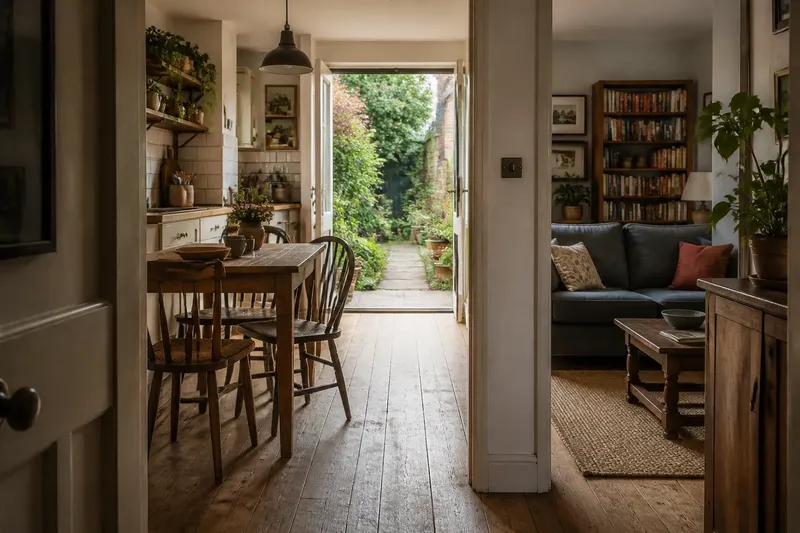
Start with the room’s job. In a reading nook, a pale surface beside the chair may matter most; in a narrow hall, an unobstructed view towards the brighter end can make the whole route feel more open.
Read the room’s use
Choose the area you want to feel clearer: a sofa corner, a dining table or the space beside a desk. Note what is already working there, such as a light-coloured wall, a clear tabletop or a view through a doorway, then identify the feature that interrupts it.
- If a large dark item is the main visual block, soften its outline with a lighter nearby textile; if that would make the furniture awkward to use, keep it and lighten the adjoining wall or floor area instead.
- If a tall item breaks up the view through the room, try a lower position or another location; if it stores things you need close by, clear only the portion that blocks the sightline.
- If a surface looks flat despite a clear layout, consider a softly reflective finish; if reflections would distract during work or television viewing, choose a matt or satin finish.
- If a bright patch feels uncomfortable, use a diffuse surface or textile nearby; if the glare comes from a direct reflection, change the angle or remove the reflective object.
- If a mirror would show a cluttered area, choose another wall or a smaller mirror; if no appealing view is available, leave the mirror out.
- If a room feels visually busy, simplify a crowded shelf or surface; if those objects are useful, group them on a tray rather than removing them all.
Each choice has a trade-off. A clearer view may mean moving storage, a glossier finish may create glare, and a lighter textile may need more frequent care.
Use colour and finish
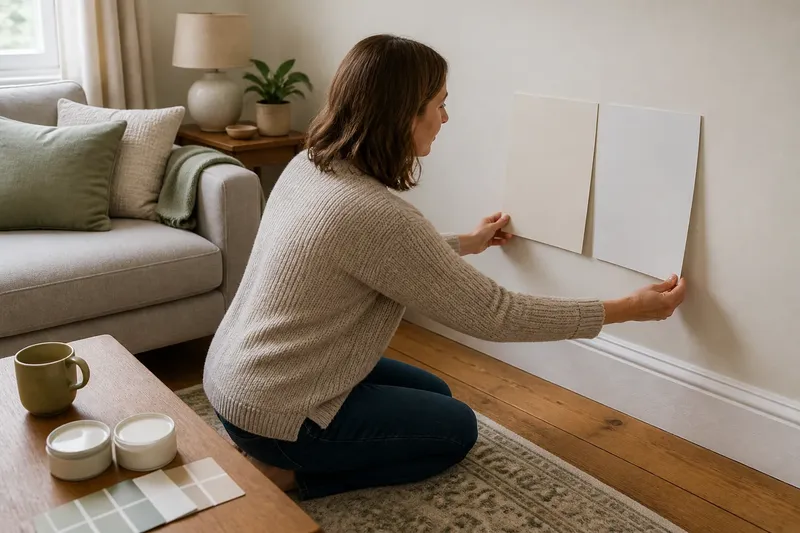
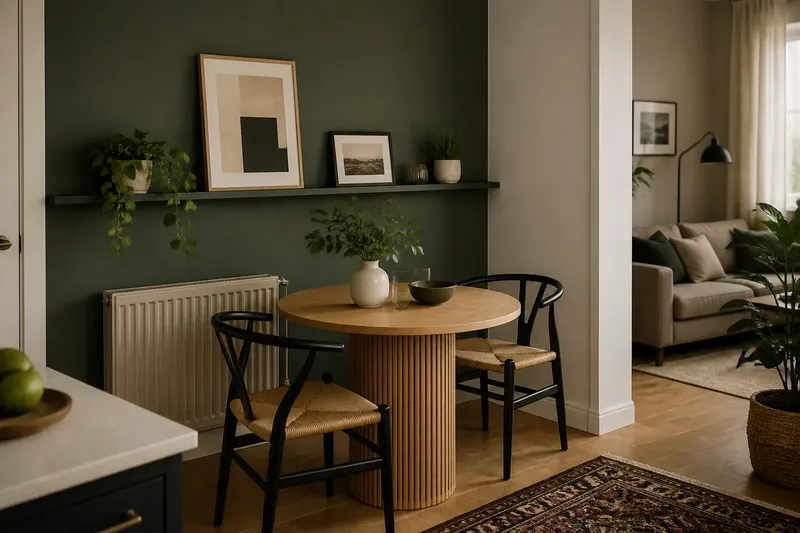
Colour affects the way surfaces relate to one another. A very dark wall behind pale furniture can make the furniture stand out sharply, while a mid-tone wall may connect the pieces more gently. This is a question of visual balance, not a rule that every room needs pale walls.
Paint, glazed ceramics, glass and polished metal can catch or return light, while matt paint, wool and textured upholstery produce a softer appearance. A satin or eggshell wall finish offers a restrained sheen; high gloss gives stronger reflections and can draw attention to uneven surfaces.
Think about what the surface will sit beside. A glazed bowl on a wooden table can add a small highlight without changing the room’s character, whereas a broad mirror near a screen may introduce distracting reflections.
Arrange a clear route
Furniture placement shapes how much of the room reads as one connected space. A tall bookcase beside a doorway can interrupt a view; a low bench or open-backed chair may preserve it while still providing a place to sit or store things.
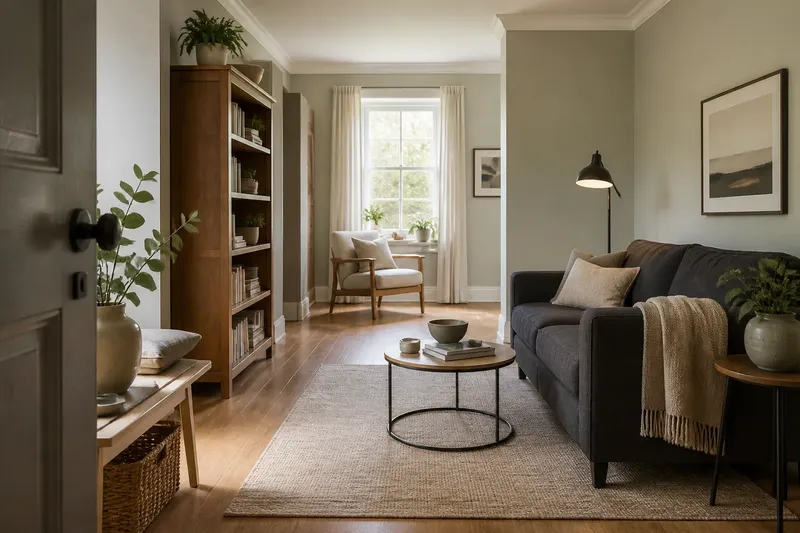
Say you have a narrow sitting room with a tall bookcase beside the entrance, a dark sofa and a pale wall beyond. Imagine moving the bookcase to a side wall, keeping the sofa where it is, and placing a light cushion on its near end; the resulting view from the entrance should show more of the pale wall and a less abrupt transition from sofa to room. The trade-off is that the bookcase may be less convenient to reach, so keep frequently used books within easy access.
Which change fits your room?
Can a mirror brighten a room?
A mirror can make a bright view or an open part of the room more prominent. If it reflects a blank wall, untidy shelf or uncomfortable glare, another finish or a different position may suit better.
Which paint finish should I choose?
Matt paint gives a quieter appearance, while satin and eggshell finishes add a gentle sheen. High gloss creates stronger reflections, so consider the wall’s condition and the room’s use before choosing it.
How can I keep a dark sofa?
Keep the sofa and adjust its surroundings: a lighter cushion, a mid-tone rug or a less crowded side table can soften the contrast. If those additions make the seating area feel busy, change just one nearby element.
What should I move first?
Look for a bulky object that interrupts a useful view or makes access awkward. If moving it would disrupt storage or circulation, clear the part that blocks the view rather than relocating the whole piece.
Check the room’s character
Make one change, then consider whether the room still suits its purpose. A more open arrangement should not leave books out of reach, seating uncomfortable or a work surface exposed to distracting reflections.
To make a room feel brighter without more lamps, favour the adjustment that supports the way you use it: a calmer colour relationship, a more suitable finish or a clearer furniture arrangement. The best change is not necessarily the shiniest one; it is the one that makes the room’s useful features easier to see without making daily life less comfortable.