The Feature Wall Fix: What It Can and Cannot Do
A feature wall can anchor a room without taking over. Learn how to weigh furniture, openings and sightlines before choosing paint, wallpaper or panelling.
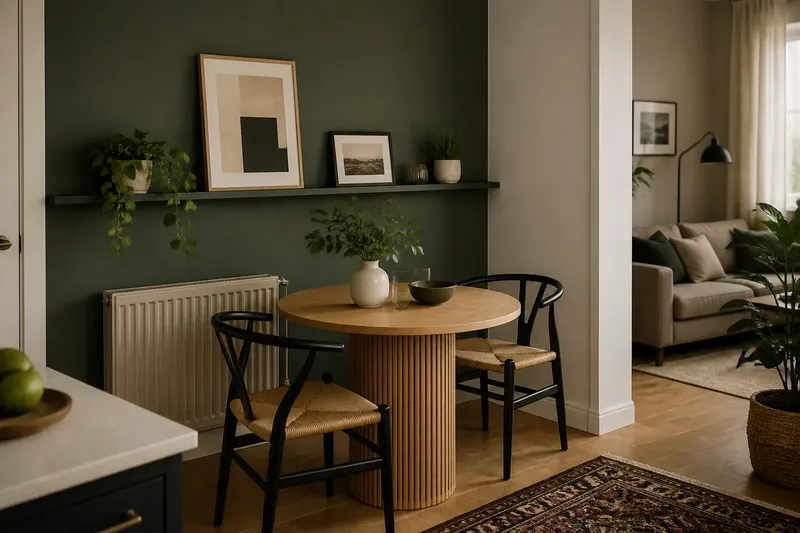
A feature wall works best when it gives the room a clear centre without disrupting how people use it. The feature wall fix is not a stronger colour; it is a treatment that supports the furniture, artwork and route through the room.
Before choosing paint, wallpaper or panelling, consider what the wall must do. It might frame a bed, gather a seating area or give an otherwise plain wall purpose. These decisions matter more than choosing a dramatic finish on its own.
Give the wall a job
Start by naming the wall’s role in the room. A wall behind a bed can make the sleeping area feel composed; one behind a sofa can help define a sitting zone in an open-plan space. If the wall has no clear relationship to an activity or object, a feature treatment may feel arbitrary.
Check the room’s main route as well. A strong pattern beside a narrow passage can pull attention towards the traffic lane, while a quiet treatment behind a desk may help distinguish work from rest without adding more furniture.
Choose one visual lead
A feature wall adds emphasis, as do a large television, a patterned rug, a statement headboard and a collection of framed pictures. Decide which element should lead, then let the others play supporting roles. That does not mean every room needs a single star; it means each element should have enough space to be understood.
For instance, a dramatic wallpaper can sit behind a plain sofa, while a patterned headboard may look clearer against a restrained surface. If several bold elements must stay, use differences in scale and texture to prevent them from blending into one busy field.
Connect furniture and wall
Furniture placement gives a feature wall its context. A bed centred on the wall, a sofa aligned with it or a low console beneath a large artwork can make the relationship feel deliberate. When furniture sits awkwardly to one side, a new finish may make the imbalance more noticeable rather than solve it.
Imagine a sitting room with a long bare wall, a sofa pushed towards one end and a doorway near the other. If the owner paints the whole wall a saturated shade, the empty stretch may become more conspicuous; shifting the sofa towards the centre and placing a floor lamp beside it could make the wall and seating read as one arrangement.
Plan edges and openings
Doors, alcoves, windows and wall returns shape the treatment’s outline. A painted plane that stops at a corner can look crisp, while wrapping colour around the return may connect adjoining surfaces. Neither choice is automatically better: the boundary should make sense with the wall’s architecture and nearby objects.
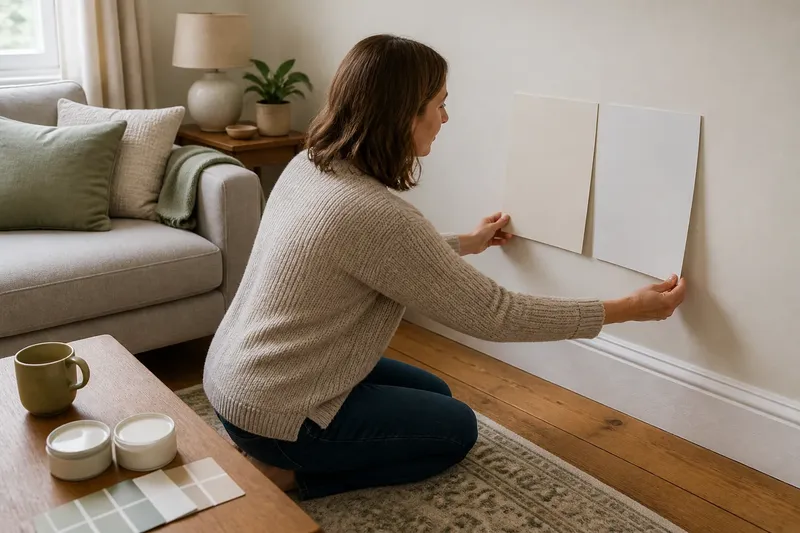
Mark the proposed edge with removable masking tape, then check whether it cuts through a feature such as a picture rail or leaves a narrow strip that looks accidental. For wallpaper or panelling, plan where the pattern or panels will start and end, especially around sockets and door casings.
Use links beyond paint
A wall treatment need not be echoed by matching cushions or accessories. A considered connection might come from a timber tone, a frame finish, a rug detail or one small object in a related colour. These links help the room feel joined up without turning it into a matching set.
Paint is not the only way to create emphasis. A large artwork, a bookcase, timber slats or a textured surface can give a wall presence while keeping colour contrast modest. Choose according to what the room lacks: a focal point, useful storage, or a calmer backdrop for existing furnishings.
Which feature wall choices fit?
Does a feature wall work in an open-plan room?
It can help define a seating or dining area without adding a divider. Choose a wall that belongs clearly to that zone, and avoid a treatment that competes with the room’s main route or another strong focal point.
Should a feature wall have artwork?
Artwork can reinforce the wall’s role, but it does not have to repeat its colour or pattern. Check that the picture has breathing room and that its scale suits the furniture beneath it.
Can a feature wall include a television?
Yes, though a busy pattern behind a screen may make the arrangement feel crowded. A restrained finish or a simple timber backdrop can help the television sit within the composition rather than dominate it.
Is panelling better than paint?
Panelling adds visible structure and can relate to existing joinery, while paint changes the surface with less visual depth. Compare how each option fits the room’s trim, furniture and desired level of detail before choosing.
Check the composition
Before committing, review the wall as part of the room rather than as a sample of colour or material. Check these specific points and let each result guide the next move:
- Check whether the wall serves a clear activity; if it does, choose a treatment that reinforces it, but if it does not, consider artwork or a bookcase instead.
- Check whether a dominant object already leads the room; if it does, keep the wall quieter, but if it does not, use the wall to establish a focal point.
- Check whether the sofa or bed aligns with the wall; if it does, centre the treatment on that relationship, but if it does not, reposition the furniture or use a smaller, furniture-led feature.
- Check whether a door, socket or trim interrupts the proposed finish; if it does, adjust the boundary or panel layout, but if it does not, keep the simpler continuous treatment.
- Check whether the feature would draw attention to an awkward gap; if it would, balance the arrangement with a lamp, artwork or side table, but if those would crowd the route, choose a subtler finish.
- Check whether the room already has several competing patterns; if it does, favour plain paint or restrained texture, but if it does not, consider patterned wallpaper or more pronounced panelling.
Say you have a hypothetical dining nook with a small round table, two chairs and a blank wall interrupted by a radiator. You first identify the nook as the wall’s job, then sketch a narrow picture ledge above the table rather than planning full-height panelling; you mark the ledge’s proposed span with tape and check that it avoids the radiator and does not crowd the chair backs. If the taped outline reads as a frame for the table, the ledge is the more coherent choice; if it looks detached, a single centred artwork is the simpler alternative.
The feature wall fix should make one useful relationship easier to see: between a bed and its backdrop, a sofa and its artwork, or a dining spot and its boundary. Keep the feature wall connected to how the room is furnished and used, and choose a treatment that leaves its practical details—openings, access and storage—working as they should.